

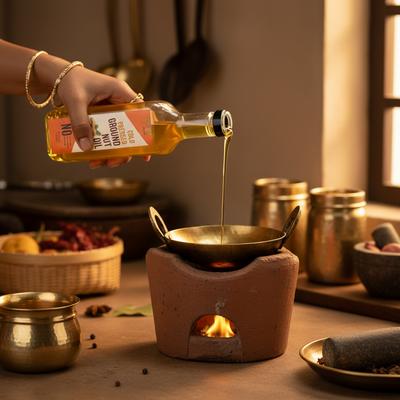
Eating healthier doesn’t always mean completely changing the way you cook.
For most Indian households, meals are built around familiar staples—roti, dal, sabzi, rice, parathas, pickles and breakfast foods. Instead of following complicated diets, a more practical approach can be to make a few thoughtful swaps in the ingredients you already use.
From choosing traditionally processed oils to trying heritage grains and reducing highly processed ingredients, small changes can make everyday cooking more interesting.
Here are 10 simple food swaps worth considering.
1. Refined cooking oil → Stone-pressed oils
Cooking oil is used almost every day, so it is one of the easiest places to start.
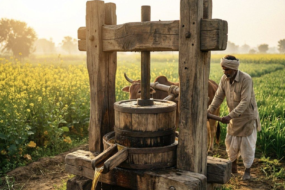
Stone-pressed oils are traditionally extracted using slower mechanical processes rather than relying on heavily refined oils. Depending on the oil, they can also bring a distinctive aroma and flavour to Indian cooking.
Rosier Foods offers several stone-pressed options, including groundnut oil, black mustard oil, yellow mustard oil, sunflower oil and coconut oil.
Try this: Use groundnut oil for everyday cooking or mustard oil when you want a stronger traditional flavour.
2. Regular atta → Khapli (Emmer) wheat atta
Wheat is a staple in many Indian homes, but there are different varieties worth exploring.
Khapli, also known as Emmer wheat, is an ancient wheat variety that has become increasingly popular among people looking to diversify their grains.
Rosier Foods currently offers Khapli (Emmer) Wheat Atta, listed at ₹499 on its product collection.
Try this: Use Khapli atta for your regular rotis and see how its taste and texture compare with your usual atta.
3. Ordinary sweet spreads → Nut butter
If your breakfast usually involves biscuits, sugary spreads or heavily processed toppings, nut butter can be an easy alternative.
Rosier Foods sells creamy, crunchy and dark-chocolate nut butter options, giving you several choices depending on your preference.
You can spread it on toast, add it to oats, blend it into smoothies or simply pair it with fruit.
Try this: Add a spoonful of nut butter to overnight oats for a quick breakfast.
4. Processed sweeteners → Raw or forest honey
Honey can add sweetness to foods without relying on conventional table sugar.
Rosier Foods‘ Wild Forest Honey is one of the products featured prominently on its website and is currently listed at ₹589.
Use honey thoughtfully rather than assuming that a natural sweetener is calorie-free.
Try this: Add a small amount to plain yogurt, oats or a homemade breakfast bowl.
5. Generic ghee → Traditional A2 desi ghee
Ghee has always been an important part of Indian cooking.
For people who enjoy its flavour, a traditionally prepared desi ghee can be an interesting upgrade from ordinary supermarket options.
Rosier Foods’ Gir Cow A2 Ghee – Made From Curd is one of the brand’s best-selling products and is prominently featured on its website.
It can be used for tadka, parathas, khichdi or simply added in small quantities to meals.
Try this: Add a small spoonful of ghee to dal or khichdi for extra flavour.
6. Packaged breakfast → Simple homemade breakfast
A healthy breakfast doesn’t have to be complicated.
Overnight oats, fruit with nut butter, homemade poha, eggs, besan chilla and traditional Indian breakfasts can all be relatively simple options.
The important part is building a breakfast around ingredients that actually keep you satisfied instead of relying heavily on ultra-processed snacks.
7. Store-bought snacks → Better homemade combinations
Instead of automatically reaching for biscuits or packaged snacks between meals, create simple combinations at home.
Some easy options include:
- Fruit + nut butter
- Yogurt + honey
- Roasted makhana
- Nuts + fruit
- Eggs + whole-grain toast
- Homemade chilla
These options are also easier to customise according to your diet.
8. Highly processed ingredients → Traditionally processed alternatives
One of the interesting trends in Indian food is the return to traditional preparation methods.
Rosier Foods describes its approach around traditional techniques such as slow Bilona churning and traditional stone milling, while its product range includes ghee, stone-pressed oils and heritage grains.
This doesn’t mean that every traditional food is automatically healthier. But traditional ingredients can offer a way to bring different flavours and less processed options into everyday cooking.
9. One oil for everything → Choose oils based on your cooking
Different oils have different flavours and culinary characteristics.
Instead of automatically using the same oil for every dish, consider what you’re cooking.
For example:
Groundnut oil: versatile for everyday Indian cooking.
Mustard oil: useful when you want the characteristic flavour associated with many North and East Indian dishes.
Coconut oil: works particularly well in recipes where coconut’s flavour complements the dish.
Rosier Foods currently offers all three categories among its stone-pressed oils.
10. Buying individual ingredients → Try curated food bundles
If you’re unsure which products to start with, curated bundles can make experimentation easier.
Rosier Foods currently lists options such as the Cold Pressed Trio, Grain Trial Trio, Essential Kitchen Pack, Cooking Pack and Immunity Pack.
For someone trying several products for the first time, a bundle can be more convenient than selecting every ingredient individually.
Which Rosier Foods products should you try first?
If you’re new to the brand, you don’t need to buy everything at once.
A simple starting point could be:
For everyday cooking:
Stone Pressed Groundnut Oil or Stone Pressed Mustard Oil.
For rotis:
Khapli (Emmer) Wheat Atta.
For traditional Indian cooking:
Gir Cow A2 Desi Ghee.
For breakfast:
Nut Butter or Wild Forest Honey.
For trying multiple products:
A curated bundle such as the Cold Pressed Trio or Grain Trial Trio.
You can browse the complete range on Rosier Foods and choose based on what you already cook at home.
Final takeaway
Healthy eating doesn’t have to mean abandoning Indian food.
In many cases, the easier approach is to improve the ingredients that are already part of your daily routine.
Swap the cooking oil you use, experiment with heritage grains, choose better breakfast ingredients and bring traditional foods like ghee back into your meals in sensible portions.
The goal isn’t perfection. It’s making small changes that are realistic enough to stick with.
Affiliate disclosure: This article may contain affiliate links. If you purchase through one of these links, we may receive a commission at no additional cost to you. Our recommendations are based on the products and information available at the time of publication.


Gallery









No Comments